
Traffic Lights
Traffic lights automatically control the flow of traffic at junctions. They ease the flow of traffic by alternating the priority in which vehicles may proceed. This allows vehicles coming from one direction to flow freely, while vehicles approaching from another direction are held back to wait their turn. Drivers must approach traffic light controlled junctions with caution and be prepared for the lights to change.
As our roads are becoming increasingly busier, we are seeing more traffic lights to help control the flow of traffic, ultimately keeping our roads safer. In the UK, you will find traffic lights at junctions, pedestrian crossings and roundabouts. You may also find temporary traffic lights near roadworks.
Traffic Lights Sequence
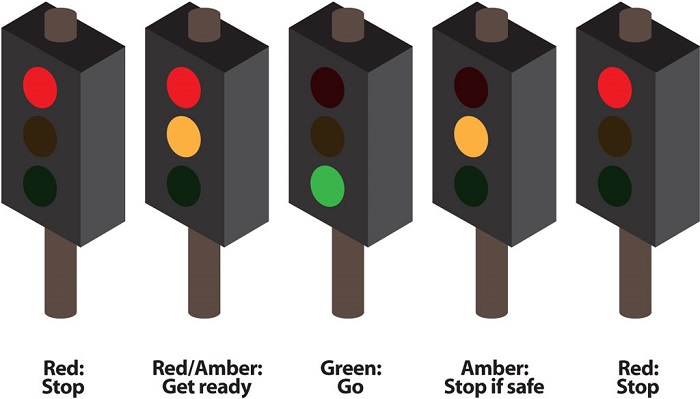
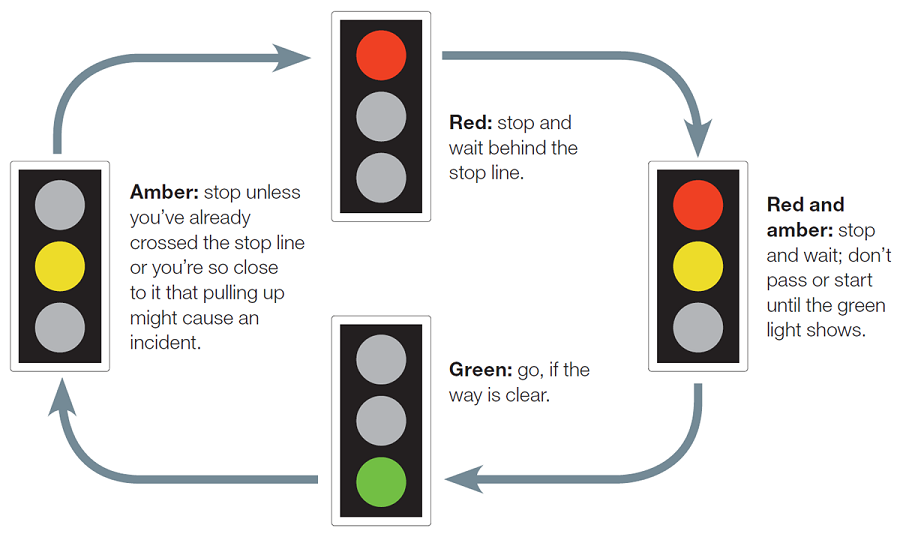
Red: Stop and wait at the stop line.
Red and Amber: Prepare to move but wait until the green shows to set off.
Green: You can go if it is safe to do so. Give way to any pedestrians who are crossing.
Amber: Stop. If you have already crossed the stop line when the amber light appears or are positioned close to the stop line where stopping may be dangerous, you should proceed.
Approaching Traffic Lights
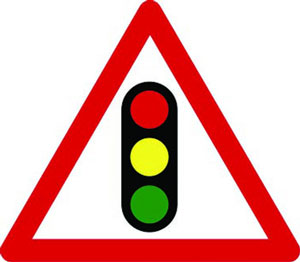
When you are approaching traffic lights, you may see a warning sign like the one shown below. Please be aware that you won’t always see this sign when traffic lights are ahead so be prepared to stop at the lights wherever you are driving.
As you approach a junction controlled by traffic lights, use the Mirror-Signal-Manoeuvre (MSM) routine. Using your mirrors will allow you to judge the distance between yourself and the vehicle behind you. Also look for traffic filtering past, such as cyclists or motorcyclists. If the lights change to amber, be prepared to slow down and stop unless it’s unsafe to do so. You should try to pay early attention to the traffic lights and slow down in good time.
You should never speed up and try to “beat the lights” while they are still green so you don’t have to stop. This is unsafe and could lead to a serious accident. A green light means you should proceed only if the road is clear and if it is safe to do so.
If you need to change lane before stopping at a set of lights, make sure that you do this as soon as possible. Signal so that pedestrians and drivers around you know your intention. If the light is on flashing amber as you approach the lights and there are pedestrians crossing, stop and give them time to cross the road.
Stopping at Traffic Lights
A stop line just before a set of traffic lights will indicate where you need to stop and wait if the lights are on red. At some traffic lights, you will see bike boxes also known as Advanced Stop Lines (ASLs). These provide a safe place for cyclists to stop and wait at busy junctions when the lights are on red. As a driver, you must not encroach on this line. Doing so could result in a £100 fine and three penalty points on your licence.
Rules 178 of the Highway Code states:
If you’re driving in slow-moving traffic, you may find yourself being caught in the cycle box as the traffic lights change colour. To prevent this, leave plenty of room between you and the driver in front of you when traffic is moving slowly.
Moving off from Traffic Lights
When the lights go green, use your mirrors and check the road is clear before continuing. Accidents at junctions controlled by traffic lights occur when one vehicle moves off through a green light while a vehicle approaching from another direction leaves it too late to stop after the lights have changed colour.
Green Filter Arrows
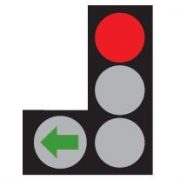
When a green filter arrow is illuminated, you should only proceed in the direction that the arrow indicates. You may still proceed even if the main light is on red.
Be cautious of the green filter arrow going out at a junction. This may mean that traffic coming from the opposite direction has been given a green light. You will need to wait until the road is clear of oncoming traffic before completing the turn.
Traffic Lights Not Working – Who Has Priority?
When traffic lights are out of order, you should treat the intersection as an uncontrolled one where nobody has priority. An uncontrolled intersection is an intersection where priority isn’t indicated by lights, signs or road markings.
Be cautious and prepare to stop as traffic approaching from the other directions may assume they have priority. If a junction is being controlled by a police officer, follow the signals given. If you are prompted to stop by a police officer, ensure you stop and wait at the stop line.
